From townhouse to royal residence
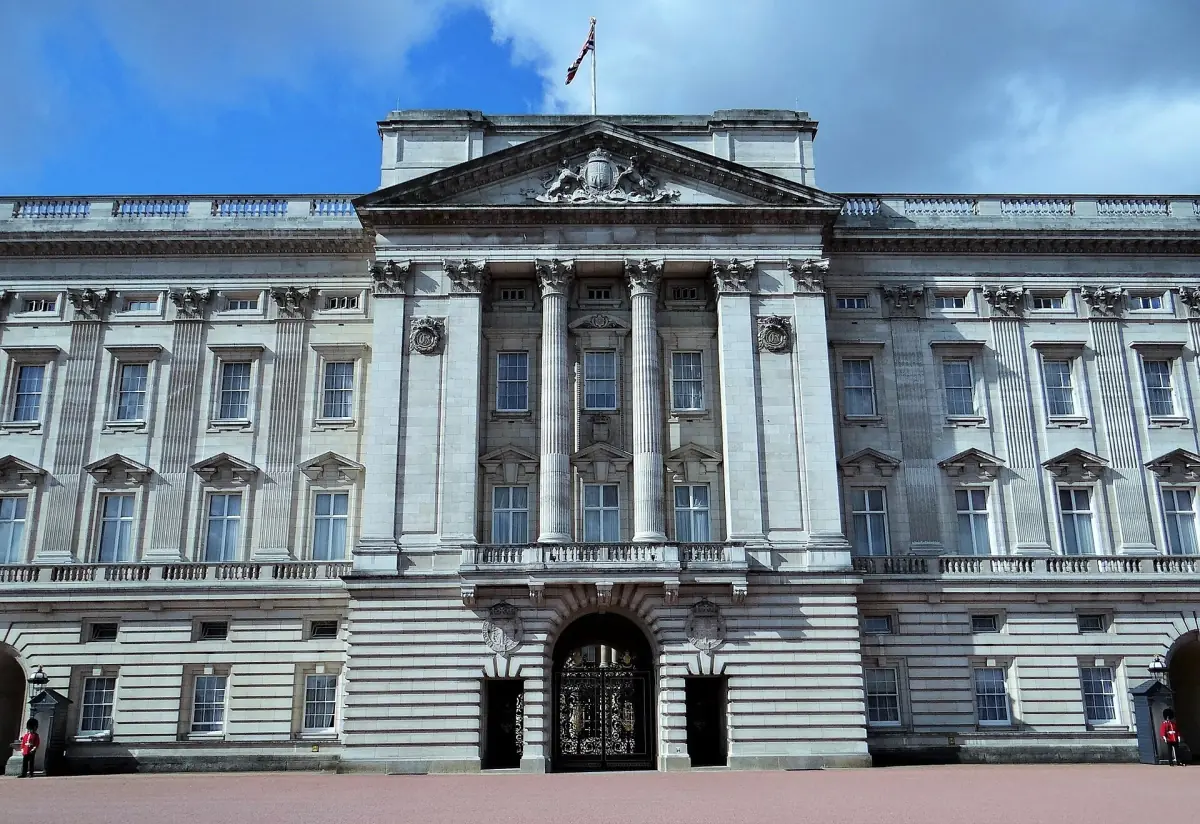
Today Buckingham Palace is the official London residence of the monarch and is used for official duties. It did not start that way. The building grew from a private house, was bought by the Crown, and was rebuilt in stages over about two centuries.
Some dates differ by a year depending on whether you count the start of work, the finish or the sale. Where that applies, this page gives both years so you can match them to what you read elsewhere.
Timeline
The main steps, in order.
1703: Buckingham House
William Winde built the house for the Duke of Buckingham and Normanby. The new building went up in 1703 and the house was ready about 1705.
1761 or 1762: the Crown buys it
George III bought the house for Queen Charlotte in 1761 or 1762.
George IV and John Nash
George IV and the architect John Nash reshaped the building. Much of what you see in the State Rooms comes from their work.
1837: Queen Victoria moves in
Victoria was the first reigning monarch to live in the palace.
1847 to 1849: the East Wing
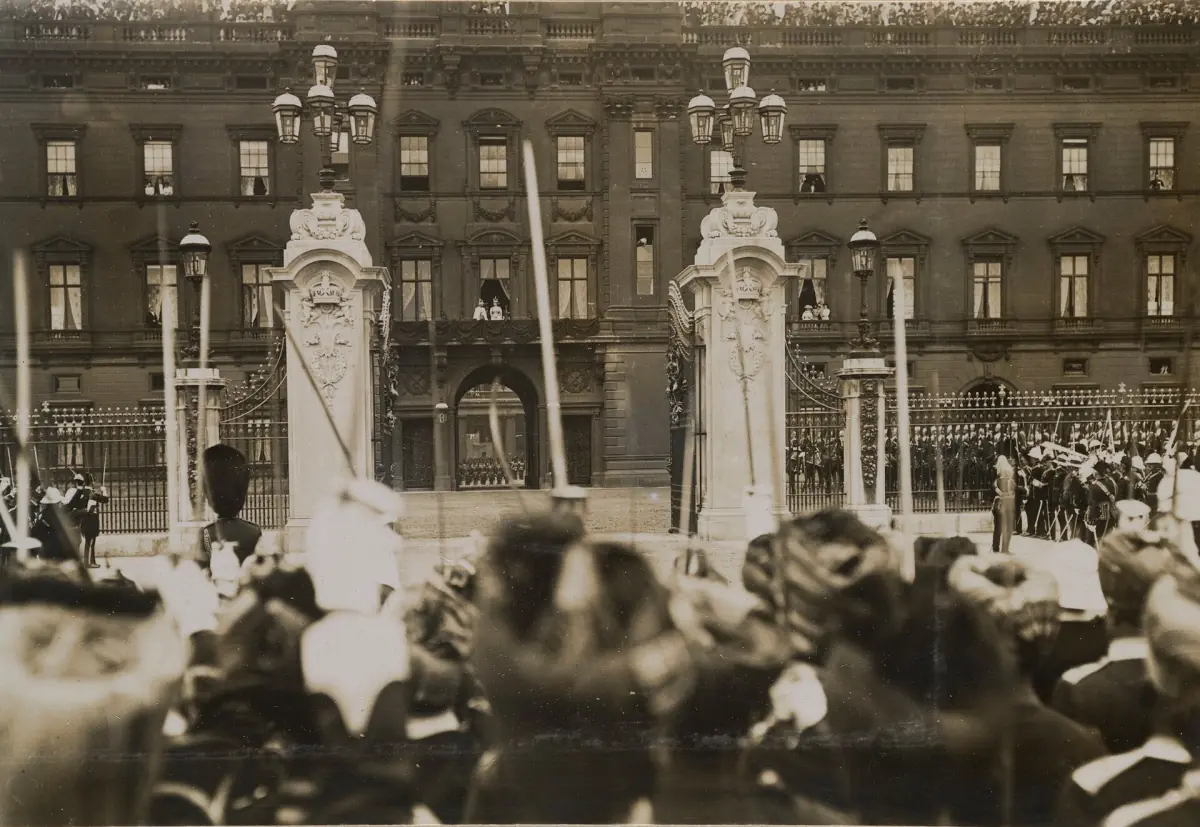
Edward Blore's East Wing closed the courtyard that had been open before. The balcony was part of this extension from the start.
1851: the first balcony appearance
The first documented royal appearance on the balcony took place in 1851, during the Great Exhibition.
1855: the Ballroom
The Ballroom was finished in 1855 and is still used for investitures and state banquets.
1913 or 1914: a new east front
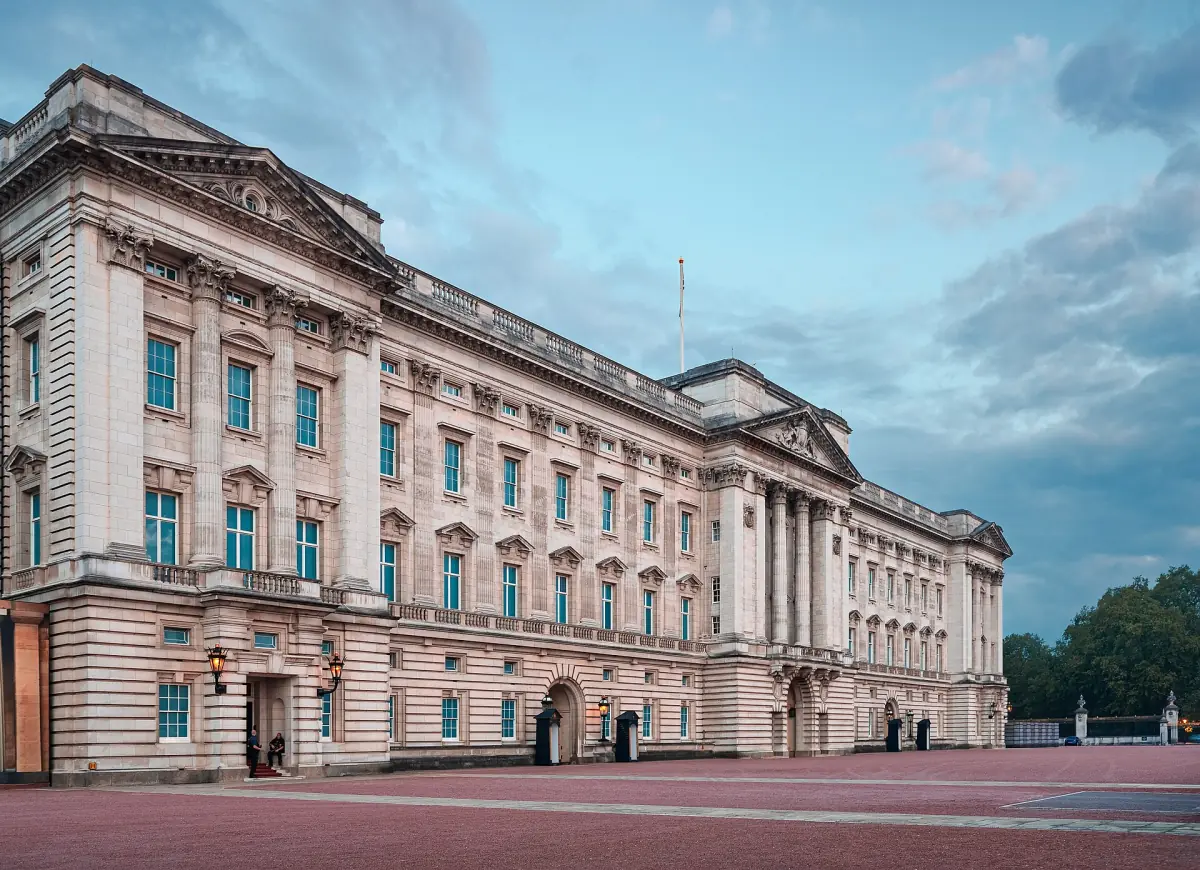
Aston Webb designed the new east facade, the front with the balcony. It is dated to 1913 in some descriptions and to 1914 in others.
Buckingham Palace tours and tickets
Palace visits, walking tours and day trips around royal London, with live prices and availability.
The Victoria Memorial
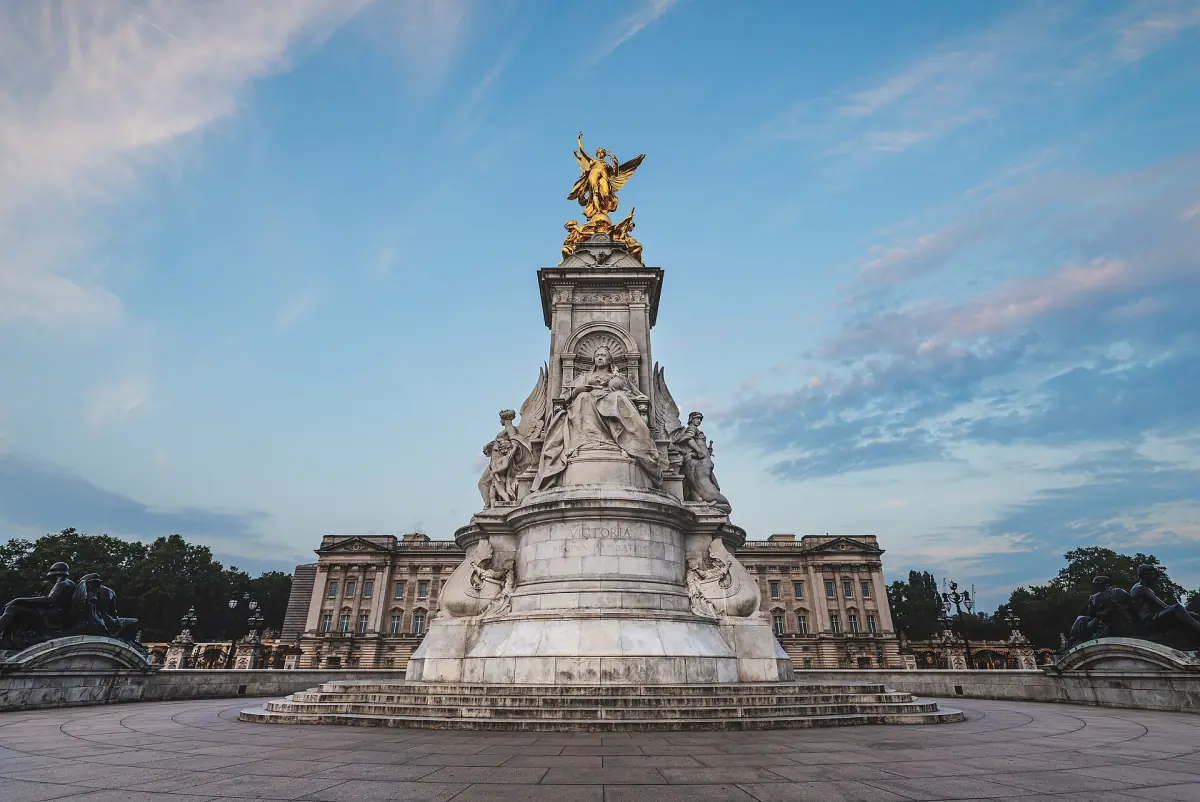
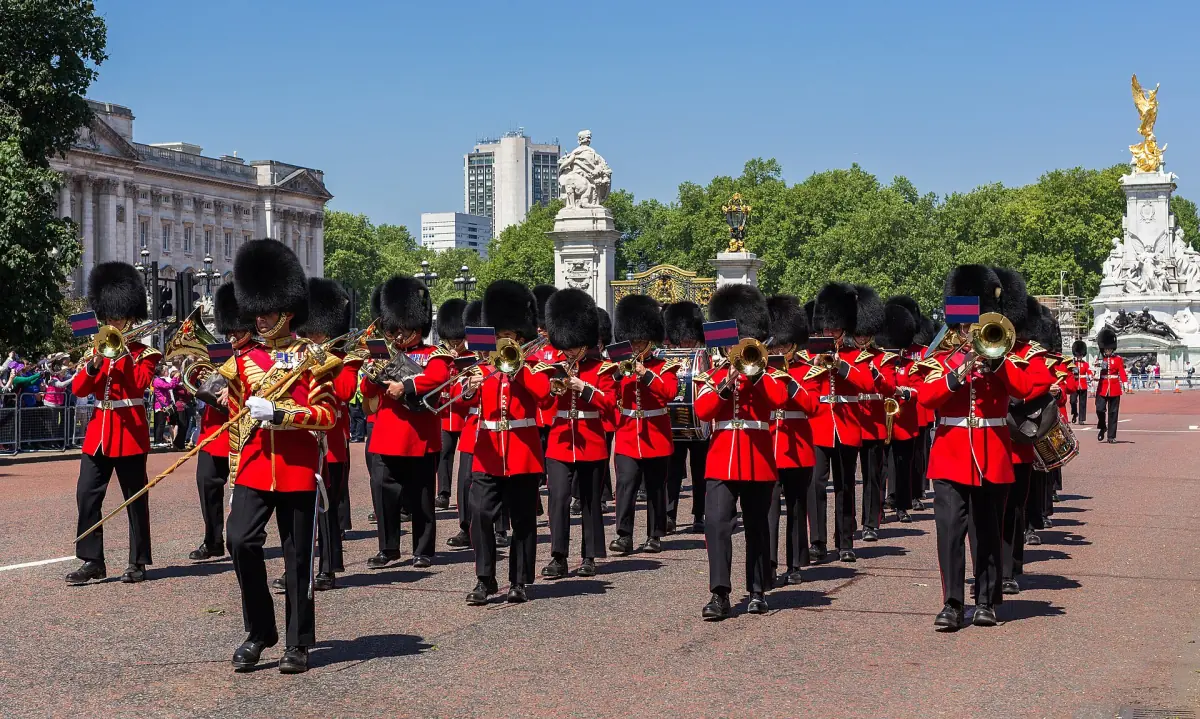
The memorial in front of the palace was unveiled by George V in 1911. It stands 25 metres high and uses 2,300 tonnes of white Carrara marble. The central sculpture is by Thomas Brock, and Aston Webb designed the whole layout.
Webb also designed the new east front, so the memorial and the facade belong together as one setting.
The palace flags
A flag rule, not a live signal.
Royal Standard
The Royal Standard flies when the sovereign is in residence. It is never flown at half-mast.
Union Flag
The Union Flag flies when the sovereign is absent.
Do not read too much into it
Treat this as a general rule that explains the flags. It does not tell you who is at the palace on a given day, so do not plan a visit around it.
Looking for Westminster? Big Ben and the Houses of Parliament are a short trip away and have their own guides: see Big Ben for the clock tower.
See the history in person
Where to start.
Palace history: frequently asked questions
When was Buckingham Palace built?
It began as Buckingham House, built from 1703 for the Duke of Buckingham and Normanby and ready about 1705. It became a palace through later rebuilding, with the East Wing in 1847 to 1849 and the east front in 1913 or 1914.
When did it become a royal residence?
George III bought the house for Queen Charlotte in 1761 or 1762. Queen Victoria was the first reigning monarch to live in the palace, from 1837.
When was the balcony built?
The balcony was part of the East Wing built in 1847 to 1849. The first documented royal appearance on it was in 1851, at the Great Exhibition.
Who designed the front of the palace?
Aston Webb designed the new east front, dated to 1913 or 1914. It fronts the East Wing that Edward Blore built in 1847 to 1849.
What do the flags mean?
The Royal Standard flies when the sovereign is in residence and the Union Flag when the sovereign is absent. The Royal Standard is never flown at half-mast.